Ophthalmology Portfolio Pathway: What Evidence Do You Need?
Are you an overseas-trained ophthalmologist planning to apply for GMC specialist registration through the Portfolio Pathway? Discover the key evidence categories to consider, how to organise your portfolio and how CESRTrack can help you identify gaps and prepare for your application.
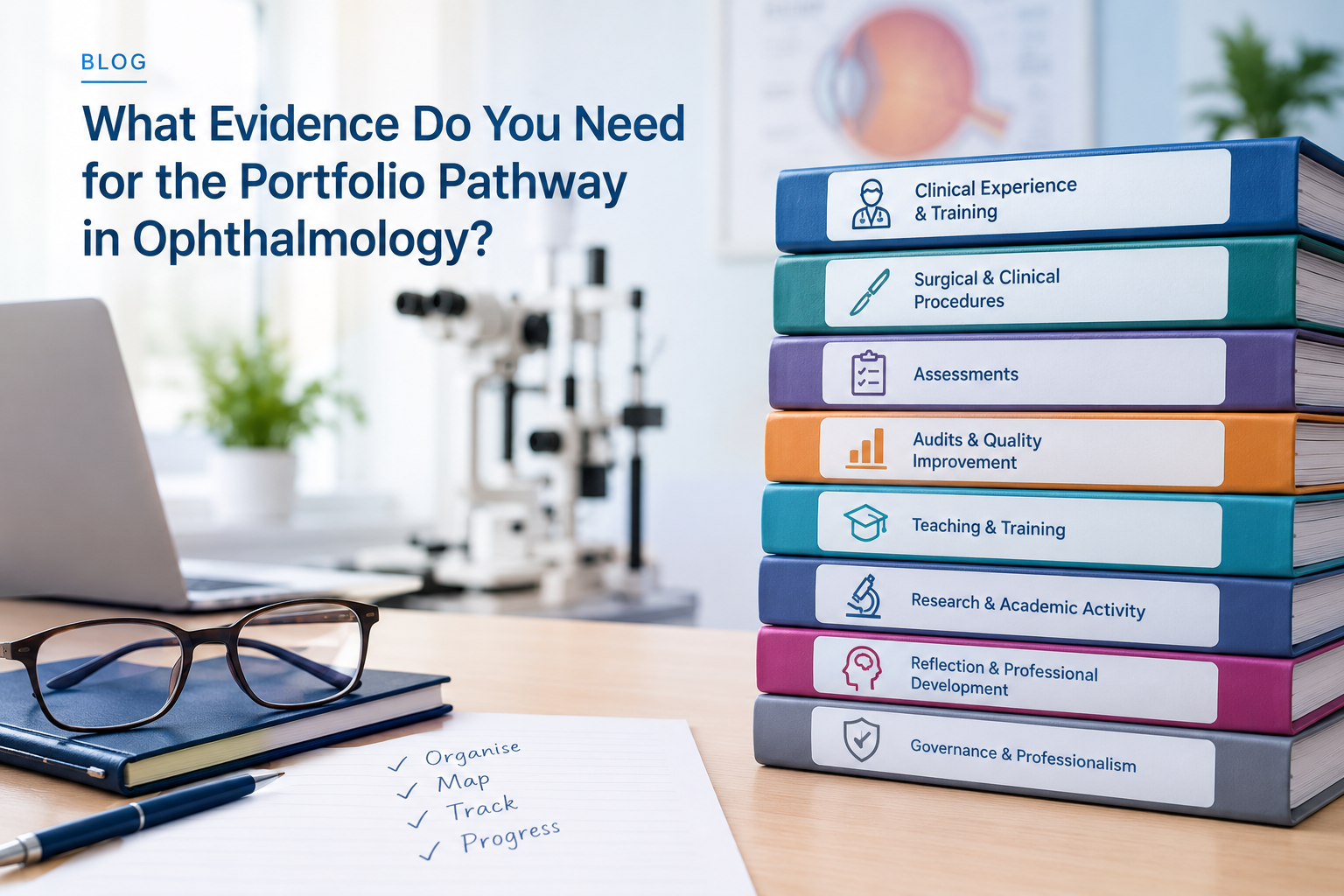
Did you know that your ophthalmology training and experience from your home country could help you gain specialist registration in the UK?
Whether you trained in India, Pakistan, Nigeria, Egypt or elsewhere, you may already have evidence that can support your application to join the GMC Specialist Register.
The GMC Portfolio Pathway, formerly known as CESR, provides a route to specialist registration for doctors who have not completed an approved UK specialty training programme. You must demonstrate that your knowledge, skills and experience meet the standards required for specialist practice in the UK.
You may not need to start from scratch.
Your previous training, surgical logbooks, clinical experience, audits, teaching activities and research may all be relevant. The key is knowing which evidence you need, how to map it against the ophthalmology curriculum and where you still have gaps.
So, what evidence do you need for the Ophthalmology Portfolio Pathway, and how can you make the most of your existing experience?
What evidence do you need for the Ophthalmology Portfolio Pathway?
Your portfolio must demonstrate that you meet the relevant requirements for specialist registration in ophthalmology. The evidence you need will depend on your experience and the competencies you must demonstrate.
Here are the main areas to consider.
1. Clinical experience and ophthalmology training
Include evidence of your specialist training, previous appointments and clinical responsibilities. Training and experience gained outside the UK may contribute to your application if you can demonstrate that they meet the required standards.
2. Surgical logbooks and clinical procedures
Your surgical logbook can demonstrate your experience in procedures such as cataract surgery. However, procedure numbers alone may not establish competence. Include relevant assessments and supporting evidence of your clinical and surgical skills.
3. Workplace-based assessments
Include appropriate assessments of your clinical skills, decision-making and performance in practice. Select evidence that supports the competencies required by the ophthalmology curriculum.
4. Audit and quality improvement
Provide evidence of your involvement in clinical audits and quality improvement projects. Explain your role, the findings and any changes made to improve patient care.
5. Teaching and training
Include evidence of teaching medical students, trainees and colleagues. Teaching feedback, presentations and records of educational activities can help demonstrate your contribution.
6. Research and academic activity
Relevant publications, conference presentations, research projects and other academic contributions may support your portfolio.
7. Reflection and continuing professional development
Keep records of relevant courses, clinical learning and significant professional experiences. Your reflections should explain what you learned and how it influenced your practice.
8. Clinical governance and professionalism
Include relevant evidence of patient safety, communication, teamwork, ethical practice and clinical governance.
These categories provide a starting point, not a complete checklist. Always check the latest GMC Portfolio Pathway guidance and the relevant ophthalmology curriculum for the specific requirements of your application.
How to organise your ophthalmology portfolio evidence
Collecting evidence is only part of the process. You also need to show how each document supports the required competencies.
For every piece of evidence, ask yourself:
- What competency does this demonstrate?
- Which curriculum requirement does it support?
- Is the evidence clear, complete and relevant?
- Do I need additional evidence to demonstrate this competency?
Start organising your documents early. This helps you identify gaps, avoid unnecessary duplication and plan your next steps before submission.
Remember, years of ophthalmology experience do not automatically demonstrate that you meet every required competency. Your application must contain clear, relevant evidence that allows assessors to evaluate your practice.
How CESRTrack can help with your Portfolio Pathway application
Managing hundreds of documents while working as an ophthalmologist can be difficult.
CESRTrack helps ophthalmologists organise portfolio evidence, map documents against curriculum requirements and track their preparation.
You can start with the free Portfolio Readiness Index to assess your current preparation and identify areas that may need more attention.
[Take the free Portfolio Readiness Check]
How to get started with the Ophthalmology Portfolio Pathway
If you are an overseas-trained ophthalmologist planning to apply for GMC specialist registration, start by reviewing the requirements and assessing the evidence you already have.
You may have more relevant evidence than you realise. Organise it, map it against the curriculum and identify any gaps that need attention.
You do not have to complete everything at once. A clear plan can help you manage your portfolio alongside your clinical responsibilities.
If you need help deciding what to do next, you can also book a free 15-minute call with a CESR mentor.
The earlier you start organising your evidence, the easier it becomes to manage your Ophthalmology Portfolio Pathway application.